Pokies Parlour Casino Australia: How Venues Work
 Available in AU
Understand the venues, electronic gaming machines and playing conditions that define Australia’s physical pokies parlours.
Table of Contents
- What a Pokies Parlour Actually Is
- From Local Clubs to Highway Venues: Where Parlour Casinos Operate
- Playing Online, Playing in a Venue: The Australian Legal Divide
- How Pokies Parlour Bonuses, Deposits and Sign-Up Offers Really Work
- Free Spins, Free Chips and Real-Money Play: Reading the Offer
- What a Pokies Parlour Review Should Examine
- Australian Rules by State: Machines, Bets, RTP and Trading Hours
- VIP Parlour Casino Programs and the Cost of Loyalty
What a Pokies Parlour Actually Is
A pokies parlour is a physical gaming establishment where patrons play electronic games for money. The machines are not a side attraction added to a bar or restaurant; they are the operating centre of the business and the main source of its revenue. In Australian usage, the phrase describes a venue built around pokie machines, even when the room is connected to another hospitality business.
The basic transaction is straightforward. A player sits at a machine, provides funds through the payment method accepted by the venue, selects a game and chooses how to stake those funds. The machine then runs an electronic game of chance. Any result is generated within the game’s programmed system, while the display presents the outcome through reels, symbols, cards, numbers or other visual formats.
That distinction matters. A pokies parlour is not simply a room full of traditional mechanical one-armed bandits. Modern machines are digital gaming terminals with screens, software, sound and electronic controls. The familiar spinning-reel format remains available, but it sits alongside games designed to look and feel more like compact video productions.
This page highlights pokies parlour casino options for Australian players in 2026, with concise details to help you focus on the features most relevant to your preferences. Use the individual verdicts as a quick reference before exploring an operator further.
License: Curacao eGaming Licence · Min. deposit: A$10 Aussie Play is notable for its Curacao eGaming Licence and a low minimum deposit of A$10.
License: Tobique Gaming Commission · Bonus: up to A$8,000 + 400 free spins across 4 deposits · Payout speed: crypto ~10-15 minutes, fiat 1-5 days · Min. deposit: A$30 SkyCrown stands out with a bonus of up to A$8,000 plus 400 free spins across four deposits. Crypto payouts are listed at approximately 10–15 minutes, while fiat payouts take 1–5 days; the minimum deposit is A$30.
Bonus: up to A$6,600 + up to 250 free spins across 4 deposits DragonSlots Casino is featured for its bonus of up to A$6,600 plus up to 250 free spins across four deposits.
License: Curacao (operating since 2017) · Bonus: 250% up to A$2,000 + 50 free spins on the first of six deposits · Min. deposit: A$20 Uptown Pokies has operated since 2017 under Curacao licensing. Its offer includes 250% up to A$2,000 plus 50 free spins on the first of six deposits, with a A$20 minimum deposit.
License: Curacao eGaming (Roby Games Ltd) · Bonus: 100% up to A$750 + 200 free spins Roby Casino operates under Curacao eGaming through Roby Games Ltd. Its listed promotion is 100% up to A$750 plus 200 free spins.
License: Curacao eGaming Licence · Min. deposit: A$10 King Billy is listed with a Curacao eGaming Licence and a minimum deposit of A$10.
License: Curacao eGaming OGL/2023/174/0082 (Dama N.V.) · Bonus: up to A$10,000 + 500 free spins across 4 deposits · Min. deposit: A$15 LevelUp Casino holds Curacao eGaming licence OGL/2023/174/0082 through Dama N.V. It offers up to A$10,000 plus 500 free spins across four deposits, with a A$15 minimum deposit.
License: Curacao · Bonus: 100% up to A$500 + 200 free spins, 10x wagering · Payout speed: crypto 30-60 minutes, fiat 1-5 days · Min. deposit: A$10 Wild Tokyo is licensed in Curacao and offers 100% up to A$500 plus 200 free spins with 10x wagering. Crypto payouts are listed at 30–60 minutes, fiat payouts at 1–5 days, and the minimum deposit is A$10.
Bonus: 100% up to A$750 + 200 free spins, 35x wagering · Payout speed: crypto 30-120 minutes, fiat 24-72 hours · Min. deposit: A$30 MrPacho offers 100% up to A$750 plus 200 free spins with 35x wagering. Crypto payouts are listed at 30–120 minutes and fiat payouts at 24–72 hours; the minimum deposit is A$30.
License: Curacao Gaming Control Board · Bonus: up to A$5,000 + 400 free spins JustCasino is listed with a Curacao Gaming Control Board licence. Its promotion offers up to A$5,000 plus 400 free spins.
The machines are the product
A large array of digital machines is normally the first thing noticed inside a pokies parlour. The selection can include machines with different themes, stake settings and reward systems. The practical reason for that variety is simple: players do not all look for the same pace, presentation or game structure.
Classic-style games use reel layouts and familiar symbol combinations. Other machines use detailed graphics, animated sequences and storylines. Some games imitate casino formats such as poker or keno, while others combine those ideas with their own themes and variations. The cabinet may look different, the controls may be arranged differently and the screen may present several game features, but the central function remains the same: an electronic gaming machine accepts a stake and produces a chance-based result.
A parlour’s selection is therefore better understood as a catalogue of formats than as one uniform type of slot. A player may move from a simple reel game to a more elaborate video game without leaving the same venue. The difference is in the presentation and rules of the individual machine, not in the fact that both are electronic games played for real money.
Stakes and game settings
Stake levels are set within the machine’s available options. The range can run from low-denomination play to substantially higher-stakes settings, depending on the machine and the venue. This is one reason the information shown on the screen matters before a session begins: the selected stake affects how funds are used, while the game rules explain the available symbols, features and reward structure.
The word “reward” can sound broader than it is. In this setting, it refers to outcomes defined by the machine’s game design. It does not turn a chance-based game into a skill contest, and it does not make a result predictable. A more elaborate display may include bonus rounds, animated sequences or several winning combinations, but those features remain part of the programmed game.
A machine can also imitate poker or keno without becoming a table game or a staffed card room. The electronic version is still played through the terminal. The screen, controls and internal software replace the physical cards, balls or dealer, while the player interacts with the machine rather than with a live table.
What happens behind the screen
From the player’s side, the process appears immediate: select a game, choose a stake and activate the play control. From the venue’s side, keeping that experience functional requires ongoing operational work. Technical support includes routine maintenance, software updates and troubleshooting.
Those tasks are easy to overlook because successful maintenance is largely invisible. A faulty screen, payment reader or control panel can interrupt a session, while an update may affect how a game operates or how information is displayed. Staff and technicians therefore deal with equipment as well as customer-facing service. The aim is continuity: machines must remain available, readable and capable of recording play correctly.
That does not mean every machine is identical or that every fault is resolved instantly. It means a functioning parlour depends on more than rows of cabinets. The room requires systems for accepting funds, displaying rules, processing play and responding when equipment does not behave as intended.
What a pokies parlour is not
The label does not automatically mean a land-based casino. A pokies parlour may be a dedicated gaming room or a gaming area attached to another business. Nor does the word “parlour” describe an online casino. A website offering digital slots is a different product and a different legal question; the physical parlour is defined by the venue, the machines and the in-person play.
The same distinction applies to phrases such as “free play” or “pokies parlour casino free.” They may describe a demonstration mode or promotional language, but the defining commercial model remains real-money electronic gaming. A machine in a physical venue is not free merely because its graphics resemble a game played on a phone.
Legal Reality There is no domestically licensed real-money online casino in Australia under the Interactive Gambling Act 2001.
In practice, the most accurate picture is unglamorous: a staffed physical room, a large collection of electronic gaming machines, payment handling, posted game information and technical support. The machines provide the attraction. The venue provides the infrastructure around them. That is the working meaning of a pokies parlour in Australia.
From Local Clubs to Highway Venues: Where Parlour Casinos Operate
A pokies parlour is not tied to one architectural format in Australia. The same local expression can describe a dedicated gaming area inside a community club, a room connected to a hotel, or a gambling space attached to a bar or restaurant. What links these settings is not a shared brand or national chain. It is the way electronic gaming is incorporated into an existing physical venue.
That distinction matters. A land-based casino is designed and identified as a casino property. A pokie parlour may be much less conspicuous from the street. In many cases, the gaming area forms one part of a broader hospitality business, with food, drinks, social facilities or accommodation providing the public-facing setting around it.
Clubs as the Local Model
Community clubs are one of the clearest Australian settings for a pokie parlour. They are established local venues rather than purpose-built gambling destinations, and the gaming area sits within a building that may also host meals, events or member activities. The result is a venue model built around repeat local use.
From behind the counter, the commercial logic is straightforward. The club does not need to attract every visitor as a tourist attraction. Its relationship is with a surrounding community that already uses the premises for other reasons. Gaming therefore operates alongside hospitality and social activity rather than standing alone.
This is why the phrase “local entertainment” can conceal several different experiences. One club may feel like a dining and community venue with a separate gaming room. Another may give the gaming area a much more prominent position. Both can fit the broader idea of a pokies parlour, even though their layouts, atmosphere and customer flow differ.
Clubs also show why a parlour should not be judged only by its exterior. A modest building can contain a substantial gaming operation, while a prominent venue may devote more visible space to food or events than to gambling. The business model is read from the internal arrangement, not from the sign above the entrance.
Hotels, Bars and Restaurants
Hotels are another established home for pokie parlours. In Australian usage, “hotel” can refer to a licensed hospitality venue rather than only a place offering rooms. Gaming may be located behind or beside the main bar, with the rest of the premises continuing to operate as a conventional pub-style business.
That arrangement creates a different rhythm from a dedicated land-based casino. People may arrive for a meal, a drink, accommodation or a social occasion, and the gaming area is available within the same property. The gambling function is therefore integrated into ordinary venue traffic. It is present, but it does not necessarily define the building from the outside.
Bars and restaurants can use a similar model. A dining venue may have a separate room or enclosed section, while a bar may place the gaming area closer to the main hospitality operation. The physical separation varies. Some venues make the transition obvious; others keep the gaming space visually connected to the rest of the premises.
The practical point is that “pokie parlour” does not automatically mean a standalone shopfront. It can be a commercial area nested inside another business. That is also why descriptions based solely on the word “casino” can mislead. A parlour casino in everyday search language may refer to a local gaming venue, even where the property is legally and commercially structured as a club, hotel, bar or restaurant.
Established local venues where gaming operates alongside hospitality and social activities.
Licensed hospitality venues where gaming is integrated into ordinary venue traffic.
Roadside locations that rely on visibility and access for travellers.
Urban Locations and Major Intersections
In cities and larger regional centres, pokie parlours are commonly positioned where ordinary customer movement already exists. Urban venues can sit within established club districts, hospitality strips or commercial areas. A site near a major intersection benefits from visibility and straightforward access without needing the scale of a destination casino.
Location affects the character of the venue. An inner-urban club may rely heavily on nearby residents, workers and members. A suburban hotel may draw from surrounding neighbourhoods. A venue at a prominent intersection can be easier to reach by car and more noticeable to passing traffic. None of these settings changes the basic category, but each creates a different pattern of arrival and repeat use.
The term “accessible” should not be confused with “open to everyone at all times.” Physical convenience describes the location, not the operating conditions. Entry, age requirements, venue policies and permitted trading hours remain separate matters governed by the relevant rules. The street address does not tell the whole story.
In practice, site selection is part of the business model. A local venue needs a dependable catchment area. A highway-facing property needs visibility and stopping access. A city venue competes for attention within a dense hospitality environment. The gaming room may be the commercial anchor, but the surrounding setting determines how customers encounter it.
Highway and Roadside Venues
Pokies parlours can also appear along highways or near major road connections. These sites are distinct from neighbourhood clubs because their visibility depends more on movement through the area than on membership or immediate residential proximity. A roadside venue may be attached to a hotel, bar or restaurant, allowing a traveller to stop at a property that serves several purposes.
The highway model is not necessarily a standalone gambling destination. Food, refreshments and accommodation can make the location useful even before the gaming component is considered. This mixed-use structure explains why parlours can operate in places that would not resemble a traditional casino district.
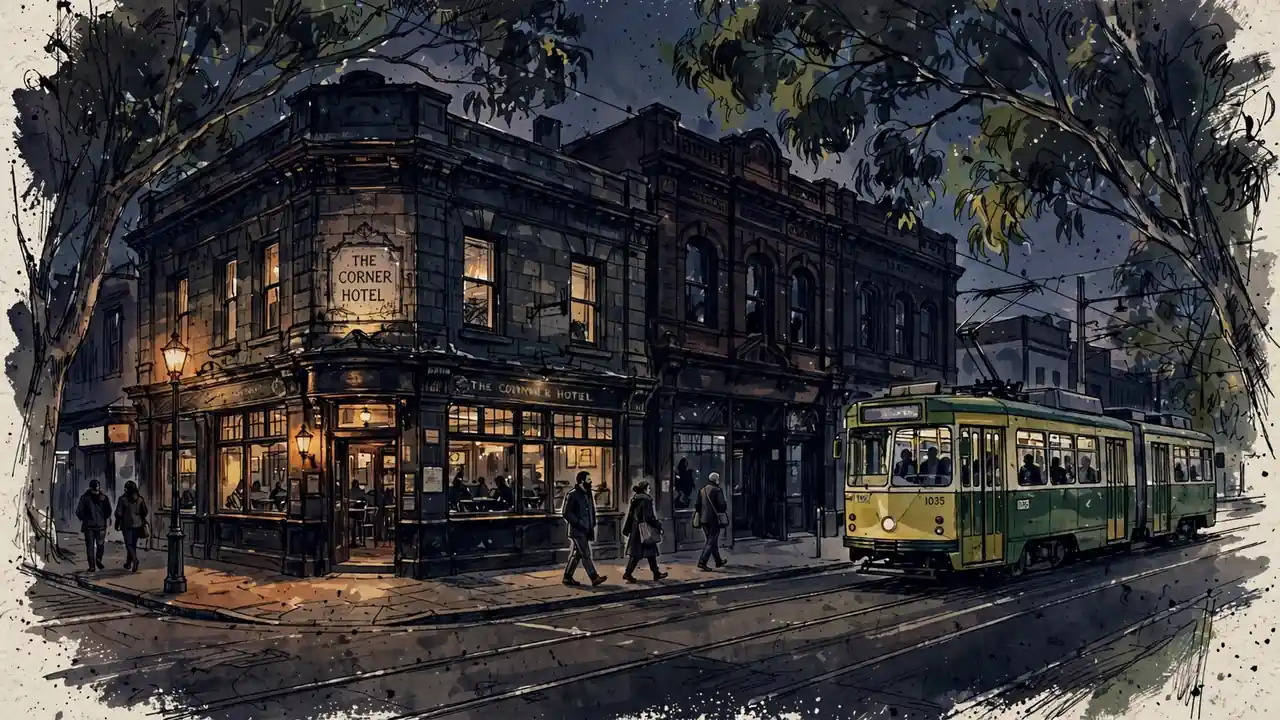
Road access is commercially important, but it does not remove the need for a suitable venue setting. A building still has to function as a lawful physical establishment, with its gaming activity incorporated into the permitted business. A large roadside sign may attract attention; it does not by itself define the legal or operational status of the gaming area.
From an operator’s perspective, the roadside setting also changes customer expectations. A local club often depends on familiarity and routine. A highway venue may encounter a more varied stream of visitors. The surrounding hospitality offer can therefore be as important to the property’s identity as the gaming room itself.
A Network of Venue Types
Taken together, Australian pokies parlours form a network of venue models rather than a single national template. Community clubs provide a local and social setting. Hotels and bars combine gaming with licensed hospitality. Restaurants can place it alongside dining. Urban sites rely on established commercial movement, while highway venues use visibility and road access.
Pokies parlours have been part of local entertainment scenes in Australia and New Zealand since the 1990s. Their staying power is connected to this flexibility: the format can be fitted into different kinds of physical property without requiring every location to look like a casino.
That flexibility is also the point most likely to be missed in promotional language. “Casino-style” may describe the games or atmosphere, but the actual venue could be a club room, hotel area or roadside hospitality property. The building, surrounding business and customer base all matter.
A proper description therefore starts with the setting. Is the gaming area attached to a community club, a hotel, a bar or a restaurant? Is it located in an urban centre, near a major intersection, or along a highway? Those details explain what the parlour is commercially before any discussion turns to the equipment inside.
Playing Online, Playing in a Venue: The Australian Legal Divide
Searching for a way to play pokies online can make a physical pokies parlour seem interchangeable with a website. In Australia, it is not. The two models sit on opposite sides of the legal divide.
- Use physical venues for regulated play
- Check local state or territory rules
- Verify machine rules and RTP on-site
- Assume online offers are locally licensed
- Treat “no deposit” as guaranteed cash
- Expect offshore sites to follow Australian law
A pokies parlour is a physical venue operating under the laws of the relevant state or territory. Its gaming machines, payment arrangements and operating practices are subject to local regulation. The rules are not set by one national gambling authority; individual Australian states and territories control much of the gaming-machine framework.
Online casino play follows a different rule. Australia has no domestically licensed real-money online casino. No Australian casino licence exists for online pokies, roulette, blackjack or live-dealer games because offering those products to Australian customers is prohibited under the Interactive Gambling Act 2001. An Australian-licensed online casino therefore is not an available category, regardless of how familiar the website’s branding or payment page may look.
Offshore websites do not fill that legal gap with an Australian licence. The Interactive Gambling Act targets providers rather than players, so an Australian customer is not committing a crime merely by placing a bet with an offshore site. That does not make the arrangement equivalent to playing in a regulated venue. If a dispute arises over an account, payment or withdrawal, the player has no recourse under Australian law.
The practical contrast is straightforward. In a venue, funds are used at machines within a locally regulated physical setting. Online, a customer may be asked to deposit money into a digital account before accessing electronic games, but no Australian casino licence protects that transaction or establishes local player recourse.
From behind the counter, this distinction was never a technical footnote. It determined which rules applied, who carried compliance responsibilities and what happened when something went wrong. Physical venue, local oversight. Online casino, no domestic licence.
How Pokies Parlour Bonuses, Deposits and Sign-Up Offers Really Work
The language around a pokie parlour bonus is borrowed from online gambling advertising, but the underlying mechanics are different. In a physical venue, money is placed into a playing account or accepted through the machine’s payment system, then used for electronic games on the premises. A “sign-up bonus” is not automatically a cash entitlement, and “no deposit” does not mean that real-money play is available without funding.
The first distinction matters because the Australian market has no domestically licensed real-money online casino. Online casino games, including pokies, are prohibited interactive gambling services when offered to an Australian customer under the Interactive Gambling Act 2001. Australian-licensed online casinos do not exist. Offshore sites may use phrases such as “casino no deposit bonus” or “welcome offer”, but an Australian player has no recourse under Australian law if a dispute arises with such a provider.
That makes the physical venue the relevant setting for discussing deposits, account balances and loyalty benefits.
What a deposit means inside a physical venue
At a pokies parlour, a deposit is not necessarily an online transfer into a remote casino wallet. It is the act of making funds available for play through the venue’s accepted payment process. Players may insert coins or notes, use a card-based method, or use a digital wallet linked to a venue app where that facility is provided. Mobile payments can also be integrated through barcode scanning.
The money is then represented in the playing system, whether through the machine, a venue-linked account or another approved payment arrangement. The practical purpose is the same: funds are made available to play electronic games. The account is not evidence of an online casino relationship, and it should not be described as one.
This is where promotional wording can obscure the commercial arrangement. A phrase such as “instant deposit” may simply refer to the speed or method by which funds reach the playing system. It does not create a bonus. A phrase such as “cashless play” may describe a payment interface rather than complimentary credit. The important question is not how prominently the feature is advertised, but what value has actually been added to the account and under what venue rules.
Funding Methods Physical venues may accept coins, notes, cards, digital wallets linked to venue apps, or mobile payments via barcode scanning.
The difference between funding and a bonus
Funding pays for play. A bonus is an additional benefit attached to an account, transaction or loyalty relationship. Those are separate ideas even when a venue’s marketing places them next to each other.
A customer who inserts money into a machine has funded play. A customer who receives points under a venue programme has received a loyalty benefit, but not necessarily extra cash. Points may be exchanged for in-game virtual items or non-monetary perks, including higher jackpots, according to a profile of the sector. That is a description attributed to a specialist industry review, not a universal rule for every Australian venue.
The wording also matters. “Reward points” can represent access, recognition or a venue benefit rather than withdrawable money. “Member value” may refer to a tracked relationship with the venue. “Bonus play” may have conditions that are not visible in the headline. Without the applicable rules, the label says little about the actual value.
The clean accounting is simple:
- A deposit is money made available for electronic gaming.
- A loyalty point is an account credit or status measure defined by the venue.
- A promotional benefit is subject to the stated terms of the offer.
- None of these terms turns a physical venue into an Australian-licensed online casino.
That last point is often left unsaid. It should not be.
How venue-linked rewards can operate
A physical venue may connect a customer account to a points programme. The programme can record activity and allocate rewards under its own conditions. The reward might be a virtual item within the venue’s gaming system or a non-monetary perk. A benefit described as a higher jackpot is not the same as a guaranteed return, a cash payment or a promise that a machine will win.
From behind the counter, the difference is operational rather than decorative. Staff need to know which account is being used, what the points represent and whether the reward can be applied to the particular machine or activity. The customer needs access to the relevant rules. A points balance without an explanation of redemption is not a transparent offer.
Some jurisdictions direct a significant portion, and in some cases the majority, of patron-generated revenue towards community development and charitable causes, according to a specialist industry review. That observation concerns the allocation of venue revenue in particular jurisdictions; it does not mean that every deposit becomes a charitable contribution, nor does it describe a universal bonus arrangement.
A loyalty programme may therefore sit alongside the venue’s broader community or commercial structure. It does not remove the need for clear machine rules, account handling or responsible-gambling measures.
Why “no deposit” is a misleading shortcut
“No deposit” is familiar online advertising language. In an Australian pokies parlour context, it needs careful translation.
If the phrase suggests that a person can open an online casino account and receive real-money pokies credit without paying in, that offer is not available from an Australian-licensed online casino because no such licence exists. If the phrase appears in offshore advertising, the provider is outside the domestic licensing model and the player has no recourse under Australian law for a dispute.
Misleading Terms Attention “No deposit” or “free” language in offshore advertising does not provide legal recourse under Australian law.
If the same wording is used by a physical venue, it may refer to something narrower: entry into a membership programme, an introductory account feature, points issued under venue rules or a promotional statement that does not provide withdrawable cash. The words alone do not establish that real-money play is free.
The distinction is commercial, not merely legal. A deposit-free sign-up can mean no initial payment for registration while still requiring funds for play. It can mean that a reward is non-cash. It can mean that the benefit is available only under conditions set out elsewhere. Each interpretation produces a different customer outcome.
“No cash. Different condition.”
Reading a sign-up offer without importing online assumptions
A sign-up offer should be broken into its actual components:
-
What is being created? It may be a venue membership, a digital account linked to the premises or a record for loyalty purposes. That is not an online casino account.
-
What is being provided? The benefit may be points, a virtual item or another non-monetary perk. It should not be treated as cash unless the rules expressly establish that meaning.
-
What must be funded? If electronic games require money to be placed into the account or payment system, registration alone has not funded play.
-
Where can the benefit be used? A venue-linked reward may apply only within the relevant physical venue or under its account procedures.
-
What happens to unused value? The offer should explain whether points, credits or other benefits expire, remain restricted or have limited redemption. If the wording does not explain this, the offer is incomplete from a practical standpoint.
This method prevents a common mistake: treating every promotional label as if it were a cash bonus. A physical pokies parlour may have a membership or loyalty mechanism, but that does not create the online sign-up model seen in offshore advertising.
Payment language and the customer account
Payment options can also be presented as incentives. Coins, credit cards, digital wallets linked to venue apps and barcode-based mobile payments are different channels for making funds available. They are not automatically different forms of promotion.
A venue account may make transactions easier to record, but convenience does not alter the legal character of the game. The funds remain connected to real-money electronic gaming at a physical venue. Nor does a digital wallet prove that the venue is operating an online casino. The location, licence structure and permitted product remain decisive.
Credit-card language requires particular care in promotional copy. Mentioning a payment method does not mean that every venue accepts it, and it does not establish that a transaction will qualify for a reward. Payment handling must be checked against the venue’s own rules rather than inferred from generic advertising.
What Australian residents should not infer
A search for a pokies parlour sign-up bonus can produce wording that sounds as if an online offer is available locally. It is not safe to infer any of the following:
- that an Australian-licensed online casino exists;
- that an offshore “no deposit” offer is protected by Australian law;
- that registration creates playable cash;
- that points can be withdrawn as money;
- that a higher-jackpot perk guarantees a win or a return;
- that a payment method is itself a bonus;
- that a venue membership is equivalent to an online casino account.
The reliable dividing line is straightforward. Physical venues may use accounts, payment systems and loyalty programmes to organise play and customer benefits. Australian residents do not have access to a domestically licensed real-money online casino offering pokies. Advertising can compress those two worlds into one attractive phrase. The terms do not.
Free Spins, Free Chips and Real-Money Play: Reading the Offer
Promotional language around a pokies parlour can make several different things sound identical. “Free spins”, “free chips” and “play free” may describe entertainment features, a venue incentive, or wording borrowed from online casino advertising. They do not, by themselves, establish that cash gambling is available without funding, that winnings can be withdrawn, or that an Australian resident has access to a lawful online casino.
The first distinction is between a pokies parlour casino real-money session and a demonstration mode. Pokies parlours offer electronic gaming machines for games of chance played with real money. In the physical venue, the machine is not merely displaying a game: it is connected to a funded play session. The customer sits at the machine, inserts coins or notes, or uses an accepted card-based payment method, then starts playing electronic games.
That sequence matters. A graphic labelled “free spin” is not necessarily a free stake. It may refer to a feature inside a game, a promotional phrase used by a venue, or a play-for-fun presentation in which no cash balance is being risked. The label describes the appearance of the action. It does not settle who funds the play or whether any result has monetary value.
Free Feature Meanings In a physical machine, a “free spin” may simply be a game action triggered by the machine’s rules where no additional stake is deducted for that specific action.
What “free spins” can mean
In a physical pokie machine, a free spin may be an awarded game action triggered by the machine’s rules. It can form part of the game experience rather than a separate cash offer. If the machine is already being played with credited funds, the spin may be free only in the narrow sense that no additional stake is deducted for that particular action.
Online advertising uses the same phrase differently. “Pokies parlour free spins” may suggest a sign-up promotion, but Australian residents do not have access to a domestically licensed real-money online casino. Australian-licensed online casinos do not exist. A website presenting free spins alongside casino play is therefore not evidence of an Australian casino licence or a lawful local online offer.
The practical question is not whether the word “free” appears. It is whether money was deposited, whether the machine balance has cash value, and whether the result can be redeemed. Promotional wording often leaves those points in the background.
“Free chips” are not automatically cash
The phrase pokies parlour free chip can be especially misleading because pokie machines do not necessarily use physical chips at all. A venue may use coins, notes, cards, digital wallets linked to a venue app, or mobile payments integrated through barcode scanning. A “chip” may therefore be informal promotional language for a credit, token, or virtual unit rather than a casino chip with independent cash value.
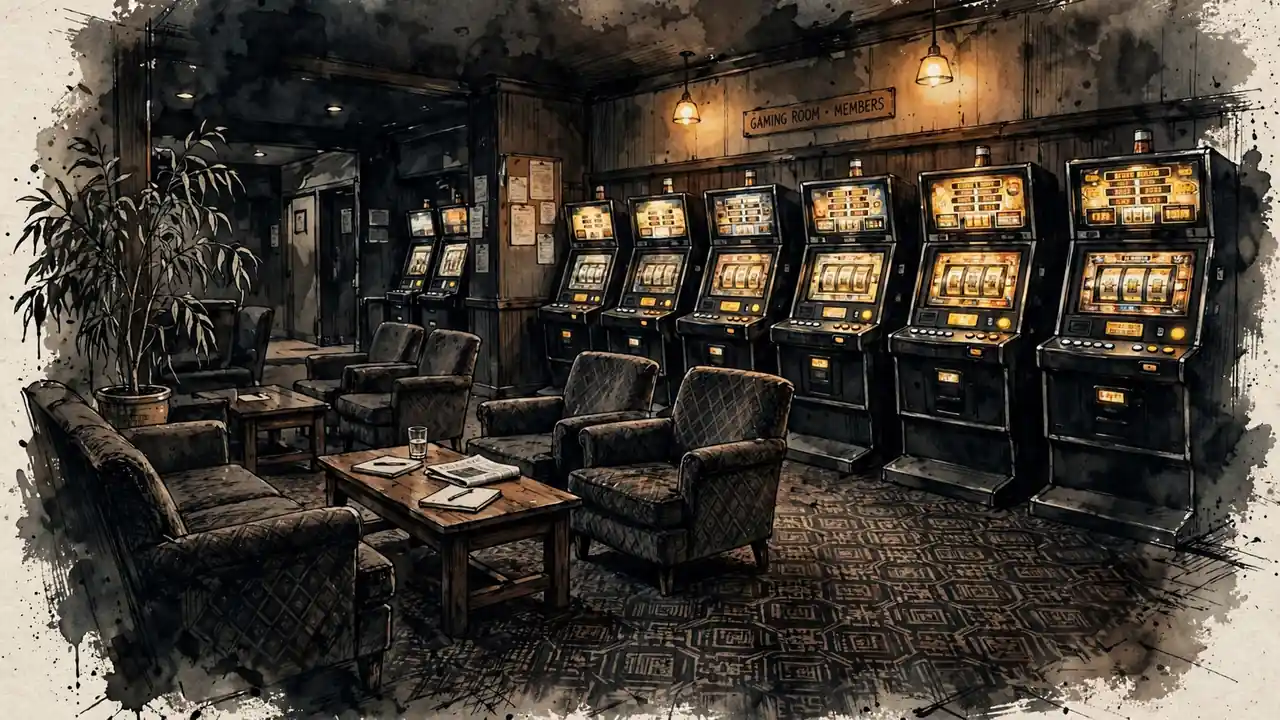
The funding method still controls the meaning. A credit placed on a machine may be available for play but not withdrawable as cash. A virtual item may unlock a game feature without representing a monetary balance. A complimentary item may be subject to venue rules that determine where and how it can be used. None of those arrangements should be treated as equivalent to cash in a player’s account.
This is where the wording “free” does useful commercial work. It removes attention from the payment step. The machine still requires a balance, and that balance may have been created by money, a venue-issued credit, or a non-cash promotional allocation. The result is different in each case.
Play-for-fun versus real-money play
“Play free” normally indicates that no real-money stake is being risked in the displayed session. It may be used for a demonstration, a game preview, or entertainment content. A play-for-fun balance is not the same as a cash balance, and a simulated result is not a cash prize.
Real-money play has a clear operational foundation: funds are loaded, a stake is selected, and the electronic game uses that balance. The available stakes can range from low denomination play to substantial high-stakes games, with the number and variety of machines differing between establishments. The presence of a familiar game interface does not change that funding structure.
A useful reading test is simple:
- Free feature: an extra action within a funded game.
- Promotional credit: a venue-issued amount whose use and value depend on stated conditions.
- Play-for-fun mode: simulated play with no cash stake or cash withdrawal.
- Real-money session: funds are credited to the machine or associated payment system and used for games of chance.
That separation also prevents a common mistake: assuming that a free feature creates a guaranteed return. It does not. A free spin can produce no payout, a promotional credit can be non-redeemable, and play-for-fun results can have no monetary status at all.
Reading the offer at the machine
At a physical venue, the payment instrument should be treated as the starting point for understanding the offer. Coins and notes are direct. Card payments, app-linked wallets and barcode-based mobile payments add an electronic layer, but they still fund the play session rather than turning the machine into a free service.
The machine’s own rules explain how an awarded feature operates. Promotional wording explains the attraction. Those are different documents with different purposes. One describes the game mechanic; the other sells attention.
From behind the counter, that distinction was always the important one. “Free” described the next action. The balance told the real story.
Summary of Play
- Physical parlours operate under strict local state and territory regulations.
- Online real-money casino play is prohibited in Australia.
- Promotional terms like “free chips” or “bonuses” often refer to non-cash loyalty benefits.
- Always verify machine rules and Return to Player (RTP) information directly at the venue.
What a Pokies Parlour Review Should Examine
A useful pokies parlour review should describe how the venue works rather than repeat promotional language. From behind the counter, the important questions are practical: what machines are available, how clearly are the playing conditions shown, how are funds handled, and what happens when a machine needs attention? A polished room is not the same thing as a transparent one.
Machine range and game formats
Machine choice is the first point of comparison, but “variety” needs detail. Parlours may offer hundreds of pokie machines, with differences in themes, stakes and reward systems. A review should identify whether the floor is built around classic reel-style games, modern video games, or a mixture of both.
Classic formats are relatively easy to understand at a glance. Video games may add modern graphics, storylines and more elaborate features. That does not make one format better. It changes the way the game presents its information and how much a player must read before starting.
A strong review records the range without pretending that every machine suits every person. The number of machines can vary between establishments, as can the available denominations and higher-stakes options. A venue with a broad floor may still have limited practical choice if many cabinets carry similar games or stake structures.
The useful test is simple. Does the review explain what is actually on the floor, or does it merely call the selection “huge”?
Stakes, rules and returns
A review should distinguish the available stake levels from any claim about winning. Pokie machines can range from low-denomination play to substantial high-stakes games, and that difference affects the character of the venue. It also matters whether the review explains how stakes are selected and where the relevant game information appears.
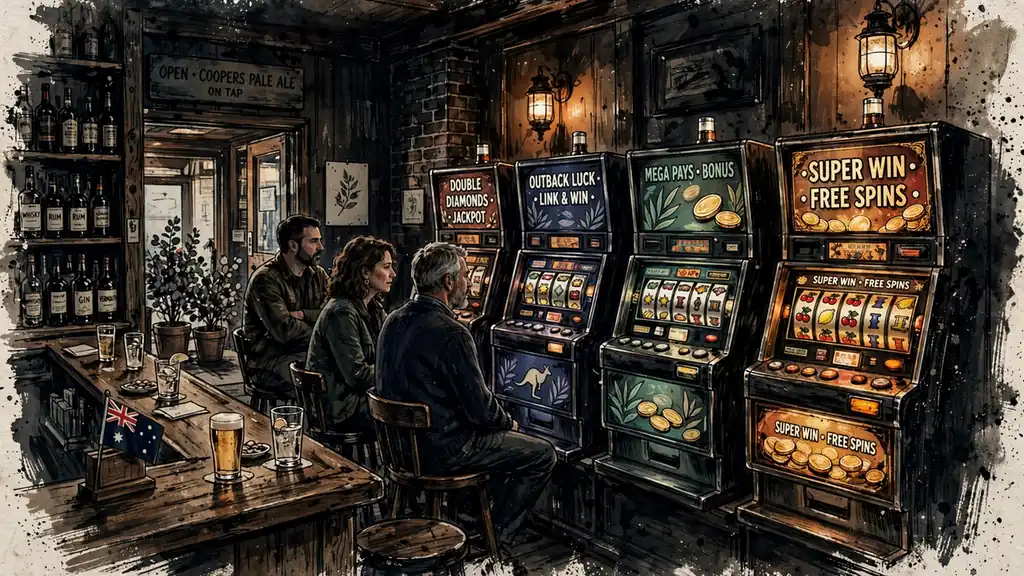
Return to Player (RTP) and game rules should be treated as information to inspect, not as a promise of a result. A review that mentions returns without showing where the figure or rules are displayed leaves out the part that matters. The same applies to reward features: descriptive language about jackpots or bonuses should not replace an explanation of the machine’s stated conditions.
I have found that vague praise hides more than it reveals.
Read the screen.
Payment handling
The payment process deserves its own section in any pokies parlour review. Customers may sit at a machine, insert coins or notes, or use a card-based payment method before beginning play. A review should explain which of those methods the venue supports and whether the process is clearly signposted at the machine.
Payment handling is not merely a convenience issue. It is part of the audit trail of a session. The review should note whether the machine shows the credited balance, records the selected stake clearly and provides understandable instructions for ending play or collecting remaining funds. Where the process is not explained, the review should say so rather than fill the gap with assumptions.
Reliability and technical support
Electronic games depend on functioning equipment. Regular maintenance, software updates and troubleshooting are part of the technical support expected in a functioning venue. A review should therefore consider whether machines operate consistently, whether faults are dealt with promptly and whether play can continue without unnecessary disruption.
This does not require inventing a performance score. It requires observing the handling of faults. Does staff support exist when a machine stops responding? Are instructions available when a game or payment function behaves unexpectedly? A review built on those observations is more useful than one based only on décor.
Review Checklist
- Identify the machine formats available (classic vs video)
- Check the available stake levels and denominations
- Locate the displayed game rules and RTP information
- Confirm accepted payment methods for the venue
- Observe the presence of technical support and staff
A review standard worth trusting
The clearest reviews separate observation from opinion. They describe machine formats, stake choices, payment handling and technical support, then identify which rules and Return to Player information are visible. They do not assign unsupported ratings, imply guaranteed outcomes or present one establishment as representative of every pokies parlour.
That standard keeps the focus where it belongs: the actual physical venue and the information available before play begins.
Australian Rules by State: Machines, Bets, RTP and Trading Hours
Pokies parlour rules are not set by one national gambling code. Gaming machines are mainly controlled by individual Australian states and territories, so the permitted machine count, maximum stake, Return to Player (RTP) and trading hours can change across a border. A “no deposit” phrase does not alter those rules: in a physical venue, play still depends on the venue’s approved payment and account arrangements.
Australian Capital Territory
A specialist industry review reports 5,200 gaming machines in the ACT, all located in clubs and hotels. The same source states that these venues have a five-hour gambling break and do not operate around the clock. It also lists a $10 maximum bet per spin and a minimum RTP of 87%.
That combination matters operationally. A machine may be available in a club or hotel, but availability is still bounded by the territory’s venue rules and the daily closure period. Machine numbers alone do not describe the permitted playing conditions.
Northern Territory
The Northern Territory is described in the same type of industry review as having 2,195 gaming machines across clubs, hotels and two casinos. The limits differ by venue category:
- Clubs and hotels: $5 maximum bet per spin
- Casinos: no maximum bet limit
- Clubs and hotels: 85% minimum RTP
- Casinos: 88% minimum RTP
The distinction prevents a casino rule from being assumed to apply to every pokie venue. The location determines which limit is relevant.
New South Wales
A specialist industry review lists 100,500 gaming machines across clubs, hotels and The Star casino in Sydney. Clubs and hotels have a $10 maximum bet per spin, while the casino has no maximum bet limit.
These figures are not a national benchmark or a promise attached to every machine. They are jurisdiction- and venue-specific descriptions. For anyone comparing a pokies parlour with a land-based casino, the decisive details are the state or territory, the venue class, the displayed game rules and the applicable RTP—not promotional wording such as “no deposit.”
VIP Parlour Casino Programs and the Cost of Loyalty
A VIP parlour casino programme is less a single bonus than an ongoing relationship between a venue and its regular patrons. The venue records activity through a membership card, account or other identification method, then connects that activity with points, invitations or service privileges. The commercial logic is straightforward: repeat visits become measurable, and measurable activity can be used to shape future offers.
The important distinction is between recognition and value. A “VIP” label may provide access to a dedicated area, invitations or personalised communication, but it does not change the underlying chance of a game. It is a loyalty structure, not a guarantee of better results.
What points can represent
A points programme may attach rewards to play, spending at the venue or both, depending on the rules set by that establishment. A profile source describes examples in which points can be exchanged for in-game virtual items or non-monetary benefits, including higher jackpots. That description should be treated as a feature of the arrangements covered by that source, not as a standard condition across Australian venues.
The wording matters. “Rewards” can mean a tangible venue benefit, a digital item with no cash value, or a privilege whose practical value depends on how often the member returns. Points may also expire, require redemption through venue systems, or be subject to programme terms. Without those terms, a points balance is only an account entry.
Nothing is free.
The cost of staying recognised
VIP positioning can encourage longer sessions, more frequent visits and increased spending to preserve status. That is why the cost of loyalty must be measured in money, time and attention—not merely in the value printed beside a reward. A benefit that requires continued play may be less valuable than it appears.
Some jurisdictions direct a significant portion, and sometimes the majority, of patron-generated revenue towards community development and charitable causes, according to a profile source. That may explain part of a venue’s public role, but it does not turn loyalty spending into a donation. The player’s transaction remains gambling expenditure.
A responsible programme should make eligibility, redemption, exclusions and membership tracking clear. It should also sit alongside mandatory harm-minimisation measures, self-exclusion and gambling support information. VIP treatment should never make those safeguards harder to use.
Created by the ”Betting Guide AU” editorial team.